Sustainability
At SWGS, sustainability is a Golden Thread running through every aspect of school life. It shapes our curriculum, enrichment opportunities, site management and long-term planning. Our aim is simple but ambitious: to make SWGS the most ecologically friendly place it can be, while empowering students to become responsible global citizens.
Since 2022, this work has been led by Mrs Briton and Mr Lawrence, with sustainability now firmly at the forefront of students’, teachers’ and support staff thinking. Together, we are building a school culture where environmental responsibility is shared, visible, and meaningful.
None of this would be possible without the full support of our Head Teacher, Trustees, Friends of South Wilts, and the wider SWGS staff body, all of whom share a genuine commitment to this collective purpose.
Highlights of 2025–26
- Expansion of Grow Your Own vegetable areas
- Greening the Quads, supported by a Friends of South Wilts grant
- Increased use of water butts to harvest rainwater
- Creation of a wild meadow and willow living fence
- Integration of sustainability into Sixth Form enrichment
- Expansion of Green Careers Week and guest speakers
- (If you can help, please email: mpl@swgs.wilts.sch.uk)
- Installation of water bottle refill stations
- Whole-school bulb bombing for the school’s 100th anniversary
- Development and rollout of the SWGS Climate Action Plan
- Continued assemblies and student leadership through Sustainability Ambassadors
- Participation in the National Education Nature Park
- Progression towards the next level of the Plastic Free Schools Award
- Hosted a SWAT Sustainability Conference to share best practice across South West England
- Planted a new orchard of various fruit tress
Plans for 2026-27
- Continuation and improvements to the Grow Your Own vegetable areas, continuing work towards RHS Awards
- Weekly Eco Club for all students and staff
- Flood prevention measures implemented across the school through government grants
- Improvements to the wild meadow with a picket fence boundary
- Further integration of sustainability into Sixth Form enrichment
- Continued Green Careers Week and guest speakers (If you can help, please email: mpl@swgs.wilts.sch.uk)
- Further rollout of the SWGS Climate Action Plan
- Teacher training around climate change, sustainability and the Climate Action Plan
- More assemblies and student leadership through sustainability prefects
- Further participation in the National Education Nature Park
- Possible camera swift boxes following a successful nesting season
- Progression towards the next level of the Plastic Free Schools Award
- Investigation into a water bottle scheme across the school to eliminate single use bottles
- Continue hedgerow and tree planting to increase biodiversity on site
- Continue specialist recycling i.e. cake wrappers, cosmetics, batteries, soft plastic, pens
- Install a new and improved school pond
Student Leadership: Sustainability Ambassadors
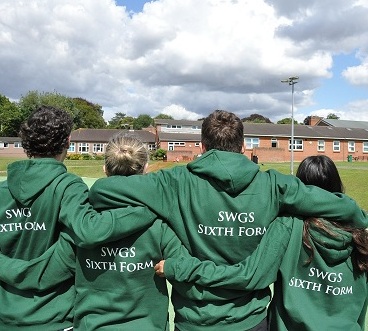
Supporting our sustainability journey is a dedicated team of Year 12–13 Sustainability prefects. These motivated and passionate students:
- Help to run Eco Club
- Lead assemblies and awareness campaigns
- Develop and deliver their own initiatives to improve the school site
- Represent SWGS at external sustainability events
Their leadership ensures SWGS remains at the leading edge of sustainable practice, both locally and nationally.
On-Site Biodiversity and Green Initiatives
- Planting over 100 trees
- Creating wild areas and a vegetable patch
- Building and monitoring bird and bee boxes
- Installing water butts and developing a compost heap
- Improving the pond area in collaboration with student leaders
These initiatives enhance biodiversity while providing valuable outdoor learning opportunities.
Student and Staff Engagement
- Delivered whole-school assemblies on sustainability, recycling, climate change, and sustainable menstrual products
- Established a thriving Eco Club, with activities such as:
- Tree planting
- Bird box monitoring
- Building log piles, bug hotels, and bee boxes
- Organised student participation in sustainability competitions, including:
- Greenpeace Poetry Competition
- Salisbury Climate Change initiatives
- RHS Gardening Awards
- Run regular school-wide sustainability campaigns, including staff sustainability pledges
Recognition and Awards
Our commitment has been recognised through several achievements:
- RHS Level 2 Gardening Awards (working towards Level 3 in 2025-26)
Plastic Free Schools status by Surfers Against Sewage - Second place in the Wiltshire Youth Council Eco Week Competition
Green Careers and Future Pathways
- Hosting external speakers working in:
- Renewable energy
- Water management
- Forestry
- Environmental sciences
- Embedding sustainability across the curriculum
- Providing guidance on Post-18 pathways and careers in the green sector
- Organising trips and workshops, including the Plymouth University Sustainability Conference
Recycling and Waste Management
We actively reduce waste and promote responsible consumption by:
- Introducing specialist recycling bins for items such as cake wrappers, cosmetics, batteries, soft plastic and pens
- Rewarding sustainable choices through a house point system for using reusable containers in the school canteen
Community Engagement and Fundraising
- Plant sales and swaps and sunflower sales to raise funds for school charities
- Participation in national and local initiatives such as:
- Plastic Free Schools
- National Education Nature Park
Monitoring, Data and Innovation
- Installed a weather station and bird box cameras
- Integrated live data into displays and curriculum activities
- Worked with external experts to assess and improve the effectiveness of our solar panels
Sustainable Buildings and Infrastructure
Environmental impact is a key consideration in all site development decisions, including:
- Introduction of LED lighting
- Boiler upgrades and energy-efficient building improvements
- Long-term planning with sustainability at the forefront